
How to Choose the Right Fastener for High Vibration Environments (Construction, Railway, and Machinery)
Vibration is one of the most common — and most underestimated — causes of fastener failure in industrial equipment. A bolted joint that looks perfectly tight during installation can work itself loose within days or weeks once it’s exposed to continuous vibration, cyclic loading, or shock impact. The result is unplanned downtime, expensive emergency repairs, and in critical infrastructure, genuine safety risk.
Choosing the right fastener for a high-vibration environment isn’t just about picking a bigger bolt or a higher grade of steel. It’s about understanding why fasteners loosen under vibration, and matching the locking mechanism to the actual conditions the joint will face. This guide walks through that decision process for three of the most demanding environments: construction, railway, and heavy machinery.
Why Vibration Loosens Bolted Joints
A properly torqued bolt relies on the clamping force (axial tension) between the bolt and nut to keep the joint tight. Vibration — especially transverse vibration, where the load moves perpendicular to the bolt axis — causes microscopic relative motion between the threads. Over thousands of cycles, this motion gradually relieves clamping force, and once enough force is lost, the nut can back off entirely.
This is different from a joint simply “coming untightened” from a single overload event. Vibration loosening is progressive and often invisible until the joint has already lost most of its holding power. That’s why standard torque specs and periodic re-tightening schedules are often not enough on their own in high-vibration settings.
What Makes an Environment “High Vibration”
Before choosing a fastener, it helps to identify which category your application falls into, since each has a different loosening profile:
- Construction and structural applications — cranes, scaffolding connections, structural steel, formwork, and heavy equipment mounts face a mix of continuous low-level vibration and sudden shock loads from impacts, wind, and machinery operation.
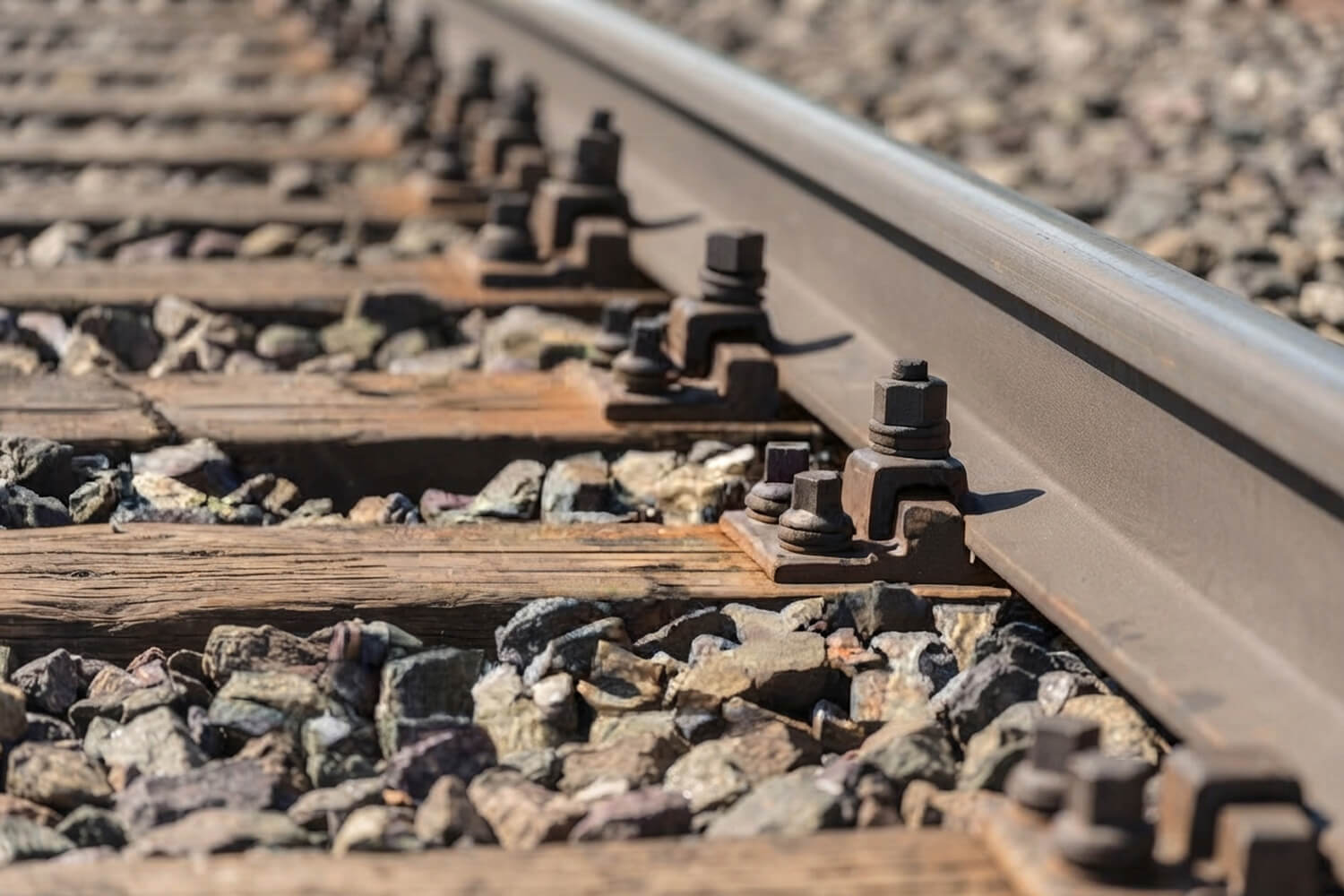
- Railway and transit infrastructure — rail fastenings, fishplate joints, signal equipment, and rolling stock components experience constant high-frequency vibration from passing trains, plus repeated shock loading at every wheel pass.
- Industrial machinery — pumps, compressors, conveyors, crushers, and rotating equipment generate sustained vibration at the machine’s operating frequency, often for 24 hours a day, which causes cumulative loosening even when each individual cycle is minor.
The common thread across all three is that the joint is rarely disturbed by a single large force — it’s worn down by constant, repetitive motion.
Comparing Fastener Options for Vibration Resistance
There are several approaches to preventing vibration loosening, each with real trade-offs.
Nylon insert (nyloc) nuts
use a plastic ring that grips the bolt threads through friction. They’re inexpensive and easy to source, but the nylon degrades under heat, UV exposure, and chemical contact, and the friction-based hold weakens with repeated installation and removal. They’re a reasonable choice for light-duty or indoor applications, but not for sustained heavy vibration or outdoor infrastructure.
Serrated flange nuts and lock washers
create a friction lock through ridges or spring tension. These help with minor vibration but are known to lose effectiveness under transverse vibration specifically — the type most common in machinery and rail applications — because the locking action isn’t strong enough to resist that particular motion.
Thread-locking adhesives
(such as removable or permanent threadlockers) chemically bond the threads together. They perform well in many settings, but they’re sensitive to temperature extremes, require clean and dry threads to apply correctly, and typically need to be reapplied after disassembly. They also aren’t ideal where a joint needs to be serviced frequently.
Double-nut systems (jam nuts)
stack two standard nuts to create opposing friction. This is a traditional low-cost method, but it requires careful torque sequencing to work correctly and still relies on friction, which vibration gradually reduces over time.
Wedge-locking, all-metal self-locking nuts
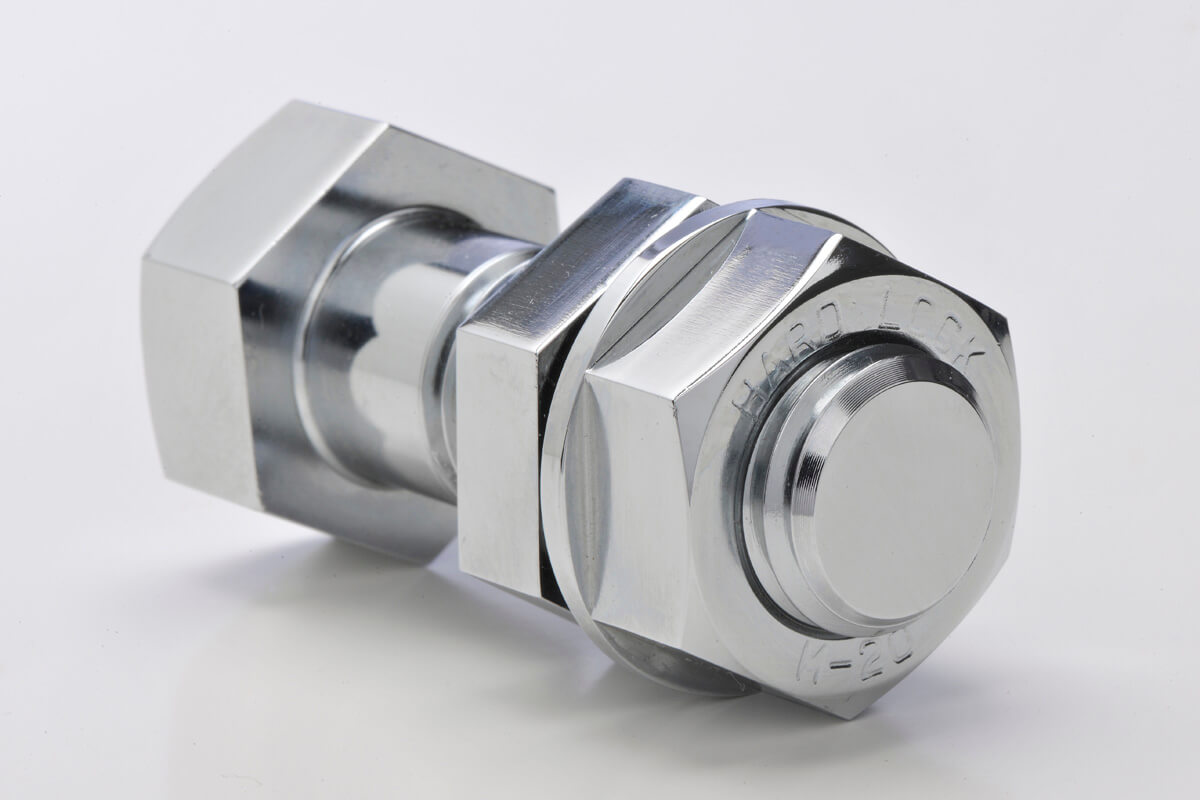
such as the HARDLOCK Nut, use a mechanical wedge principle instead of friction or adhesive. A convex nut with an off-center protrusion is paired with a concave nut, and tightening the two together generates a transverse locking force that holds the joint independent of vibration direction. Because the lock is mechanical rather than friction-based, it doesn’t degrade with heat, chemical exposure, or repeated vibration cycles, and it can be reused without losing performance, provided the correct reinstallation gap is maintained.
How to Decide: A Practical Checklist
When selecting a fastener for a high-vibration application, work through these questions:
- What kind of vibration is present?
Continuous low-amplitude (machinery), high-frequency shock (rail), or intermittent impact (construction)? Transverse vibration is the hardest to resist with friction-only solutions. - Will the joint need to be serviced or reused?
If bolts need periodic inspection or replacement, a mechanical lock that survives reuse is more practical than adhesives or friction-based nuts that lose effectiveness after disassembly. - What’s the environmental exposure?
Heat, moisture, UV, and chemical exposure all degrade nylon and adhesive-based solutions faster than all-metal mechanical options. - What’s the real cost of a failure?
For structural, rail, or safety-critical joints, the cost of an unplanned failure (downtime, safety risk, liability) usually far outweighs the small cost difference between a basic lock nut and a tested self-locking fastener. - Is there test data behind the claim?
Many “vibration-resistant” fasteners are marketed without independent verification. Look for fasteners tested against recognized standards — for example, the Junker transverse vibration test (DIN 65151 / ISO 16130) or NAS aerospace loosening standards — rather than relying on manufacturer claims alone.
Where This Matters Most
In construction, a loosened structural bolt can compromise load paths in scaffolding or steelwork. In railway systems, a loosened fastening on track infrastructure or rolling stock is a direct safety hazard, which is why rail authorities in multiple countries have adopted mechanical self-locking fasteners for critical connections. In machinery, loosened bolts on rotating or reciprocating equipment often lead to secondary damage — a nut that backs off a compressor housing or conveyor bearing can cause far more expensive damage than the fastener itself.
In all three cases, the pattern is the same: friction-based and adhesive solutions can work for lighter-duty, lower-consequence joints, but as vibration severity and the cost of failure increase, a mechanically locked, all-metal fastener with independent test verification becomes the more reliable — and often more economical — choice over the life of the equipment.
The Bottom Line
There’s no single “best” fastener for every high-vibration environment — the right choice depends on the type of vibration, the need for reusability, environmental exposure, and how critical the joint is. But as a general rule, the more severe and continuous the vibration, and the higher the cost of a failure, the more it makes sense to move away from friction-based solutions and toward a mechanically verified locking system.
HARDLOCK self-locking nuts, bearing nuts, and set screws are engineered around this exact principle, and are backed by DIN 65151 Junker testing and NAS aerospace loosening standards. If you’re specifying fasteners for a construction, railway, or industrial machinery application, request a quote or technical consultation to find the right fit for your project.
©HARDLOCK Industry Co., Ltd.: JUNKER LOOSENING TEST
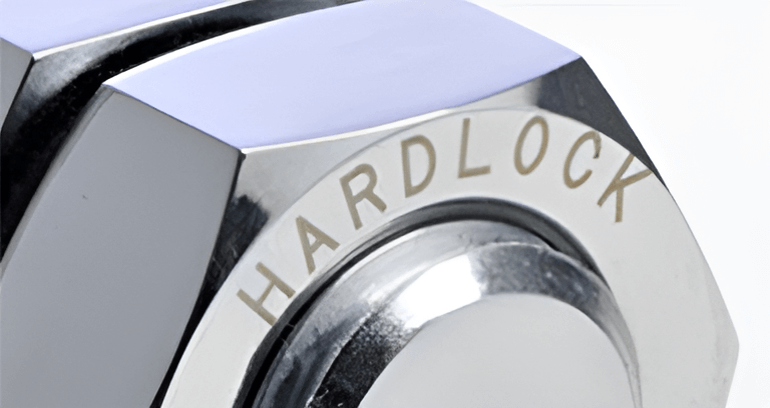
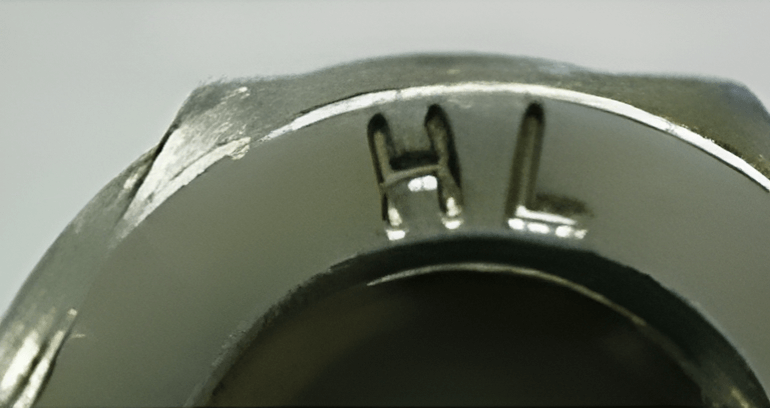
⚠️ Quality issues caused by counterfeit products can result in serious and costly consequences for your business. Please exercise caution and choose genuine HARDLOCK solutions.
*A-Lex International Marketing is an authorized distributor for HARDLOCK Industry Co., Ltd.