
Lock Nut vs Threadlocker: Which Fastening Method Works Best for Vibration and Heavy Load?
When a bolted joint needs to survive vibration or heavy cyclic load without backing off, engineers and maintenance teams typically reach for one of two solutions: a mechanical lock nut or a thread-locking adhesive. Both are widely used, both have loyal advocates, and both can fail badly if applied to the wrong situation.
This comparison breaks down how each method actually works, where each one holds up, and where each one falls short — so the choice comes down to engineering fit rather than habit or whatever’s already in the parts bin.
How Threadlockers Work
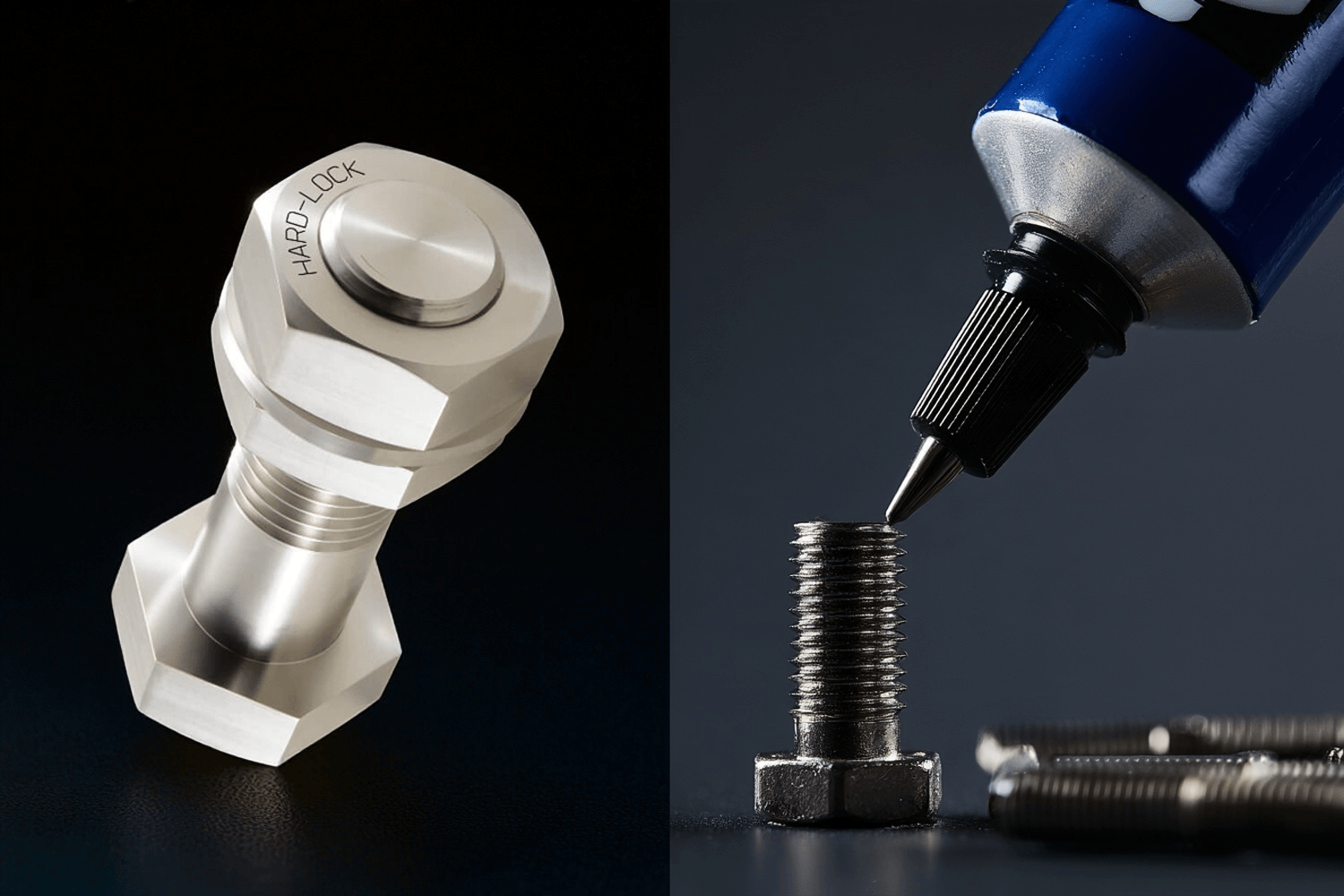
Thread-locking adhesives (commonly known by brand names like Loctite) are anaerobic resins applied to the threads before assembly. The adhesive cures in the absence of air, once the joint is tightened, filling the microscopic gaps between the threads and bonding them together. This eliminates the small movements between thread surfaces that allow a nut to gradually back off under vibration.
Threadlockers are typically rated by strength and removability — low-strength (removable by hand tools), medium-strength (removable with normal tools), and high-strength (often requiring heat to break the bond for disassembly).
Strengths:
- Low cost per application and widely available
- Works with standard nuts and bolts — no special hardware required
- Effective at filling minor thread gaps and reducing corrosion-driven seizing
- Good option for lighter-duty joints that are rarely disassembled
Limitations:
- Cure time means the joint isn’t fully locked immediately after assembly
- Performance drops significantly outside the adhesive’s rated temperature range — most threadlockers degrade well before the temperatures seen in engine bays, industrial ovens, or outdoor equipment in extreme climates
- Requires clean, dry, oil-free threads to bond properly, which is difficult to guarantee in field conditions or on existing equipment
- High-strength grades often require heat to disassemble, which isn’t practical for joints needing frequent maintenance
- Bond strength can be inconsistent if the wrong grade is used, too much or too little is applied, or the joint sees movement before the adhesive fully cures
- Not a mechanical fix — if the underlying vibration is severe enough, adhesive alone may not fully compensate for lost clamping force over time
How Mechanical Lock Nuts Work
Mechanical lock nuts resist loosening through hardware design rather than chemistry. This category covers a range of approaches with very different performance levels:
- Nylon insert (nyloc) nuts grip the bolt through friction from a plastic ring — inexpensive, but the nylon degrades with heat and age, and the friction weakens with reuse.
- Serrated or friction-based lock nuts rely on surface tension between ridges and the mating face — helpful for minor vibration, weaker against sustained or transverse vibration.
- Double-nut (jam nut) setups stack opposing friction between two standard nuts — functional, but dependent on correct torque sequencing and still friction-based, so it degrades over time.
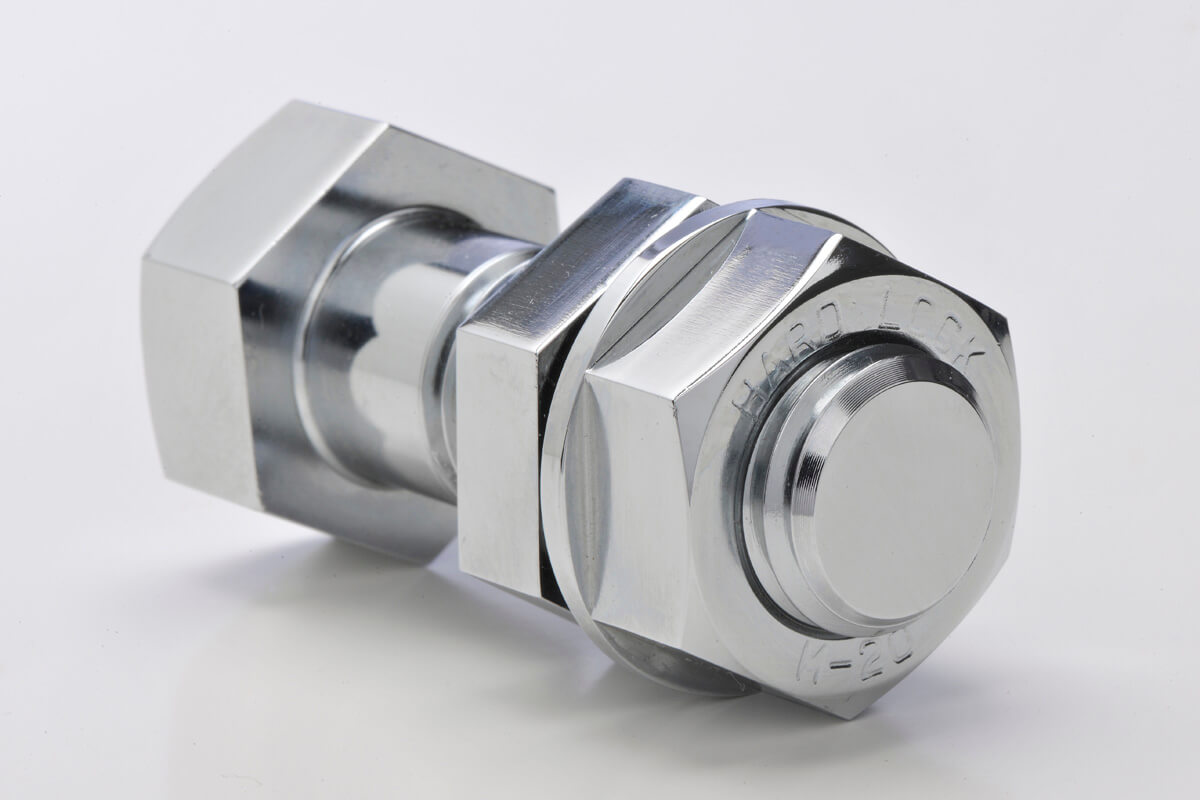
- Wedge-locking, all-metal nuts — such as the HARDLOCK Nut — use a mechanical wedge principle. A convex nut with an off-center protrusion pairs with a concave nut, and tightening the two together generates a transverse locking force that holds regardless of vibration direction, without relying on friction or adhesive at all.
Strengths (wedge-locking type specifically):
- No cure time — full locking effect is achieved the moment it’s torqued to spec
- Performance doesn’t degrade with heat, chemical exposure, or age, since there’s no adhesive or plastic component
- Reusable without losing effectiveness, provided the correct reinstallation gap is maintained
- Works with standard commercially available bolts — no special threadlocker inventory or application process to manage
Verifiable through standardized mechanical testing (see below)
Limitations:
- Higher per-unit cost than a standard nut or a tube of threadlocker
- Requires the correct nut pairing (convex/concave) rather than off-the-shelf hardware, so parts need to be specified and sourced correctly
- Not necessary for genuinely low-vibration, low-consequence joints where a standard fastener already performs fine
Vibration Type Matters More Than Brand
One of the most overlooked factors in this decision is the type of vibration involved. Transverse vibration — where the load moves perpendicular to the bolt’s axis — is the most damaging to bolted joints and the hardest for friction-based solutions to resist. This is the type of vibration standardized in the Junker test (DIN 65151 / ISO 16130), which is widely used specifically because it isolates transverse loosening rather than simple axial vibration.
Threadlockers and friction-based lock nuts can perform reasonably well against axial vibration but tend to underperform against transverse loading, since neither approach directly counteracts sideways thread movement. Wedge-locking mechanical designs are built specifically to resist this transverse motion, which is why they’re tested and specified for it directly.
Heavy Load and High-Cycle Applications
For joints under heavy static load, both approaches can perform adequately if properly specified and installed. The real differentiator shows up under high-cycle repeated loading — machinery running continuously, rail infrastructure under constant traffic, or structural connections exposed to wind and impact loading over years of service.
In these conditions:
- Adhesive bonds can fatigue or degrade gradually with thousands of load cycles and temperature swings, especially outdoors
- Friction-based mechanical locks lose clamping force incrementally with each cycle
- Wedge-locking mechanical designs maintain consistent locking force because the mechanism doesn’t rely on a bond or friction coefficient that changes over time
This is why sustained-vibration environments — railways, wind turbines, heavy rotating machinery — have increasingly moved toward tested mechanical locking systems for critical joints, while threadlockers remain common for lighter-duty assembly work, automotive applications, and joints serviced regularly enough that reapplication isn’t a burden.
Maintenance and Disassembly Considerations
This is often the deciding factor in practice. If a joint needs to be opened and reassembled regularly:
- Threadlockers need to be reapplied after every disassembly, and high-strength grades may require heat to break the bond, adding time and risk to maintenance work.
- Friction-based lock nuts typically need replacement after removal, since the locking feature (nylon insert, serration) degrades with reuse.
- Wedge-locking mechanical nuts can be reused without losing performance, as long as the correct gap is maintained between the two nut halves during reinstallation — a meaningful advantage for equipment with scheduled maintenance cycles.
Quick Comparison
| Factor | Threadlocker | Friction Lock Nut | Wedge-Locking Nut |
|---|---|---|---|
| Locking mechanism | Chemical bond | Friction | Mechanical wedge |
| Performance vs. transverse vibration | Moderate | Weak–Moderate | Strong |
| Heat/chemical resistance | Limited by adhesive rating | Degrades with heat/age | Not affected (all-metal) |
| Reusable without replacement | No (reapply) | Usually no | Yes |
| Upfront cost | Low | Low | Higher |
| Best suited for | Light-duty, infrequent disassembly | Moderate vibration, budget-sensitive | Sustained vibration, critical/safety joints |
How to Choose
- Choose a threadlocker for lighter-duty assemblies with low-to-moderate vibration, where the joint is rarely disassembled and operating temperatures stay within the adhesive’s rated range.
- Choose a friction-based lock nut for budget-sensitive applications with mild vibration, where periodic replacement of the nut is acceptable.
- Choose a wedge-locking mechanical nut for high-vibration, high-cycle, or safety-critical joints — particularly where transverse vibration is present, where the joint needs to be serviced and reused, or where the cost of an unplanned failure far exceeds the price difference in hardware.
The Bottom Line
Threadlockers and mechanical lock nuts aren’t competing solutions to the same problem — they’re suited to different risk levels. For light assembly work, a good threadlocker is often the simpler, cheaper choice. But for joints exposed to sustained transverse vibration, heavy cyclic load, or where failure carries real safety or downtime cost, a tested mechanical locking system holds up in ways adhesive and friction-based methods aren’t designed to match.
HARDLOCK Nuts use an all-metal wedge-locking design verified through DIN 65151 Junker testing and NAS aerospace loosening standards, with no cure time, no reapplication, and full reusability. If you’re specifying fasteners for a high-vibration or heavy-load application, request a quote or technical consultation to determine the right fit.
©HARDLOCK Industry Co., Ltd.: JUNKER LOOSENING TEST
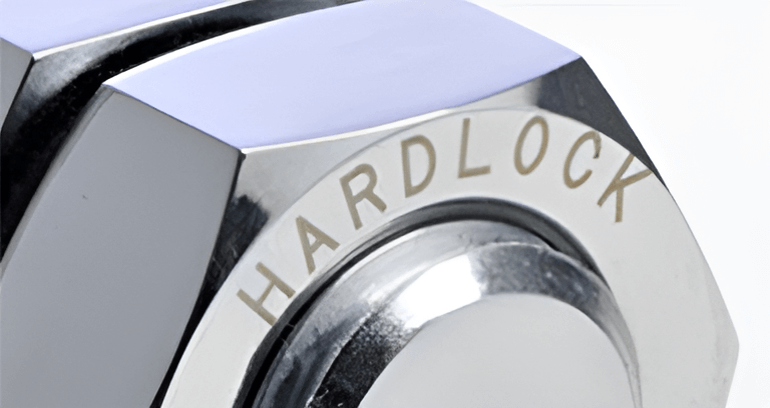
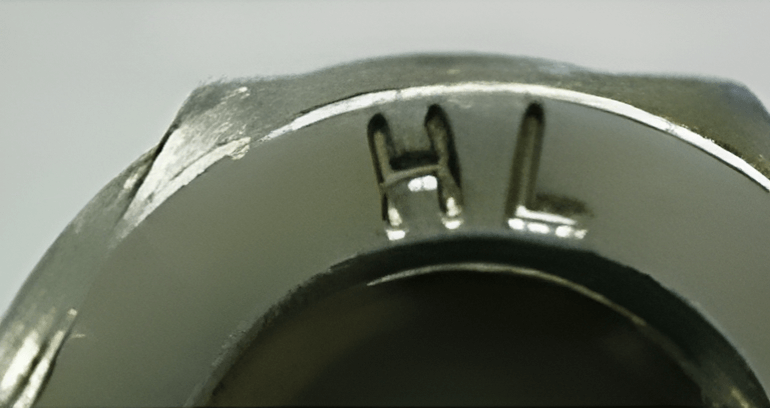
⚠️ Quality issues caused by counterfeit products can result in serious and costly consequences for your business. Please exercise caution and choose genuine HARDLOCK solutions.
*A-Lex International Marketing is an authorized distributor for HARDLOCK Industry Co., Ltd.